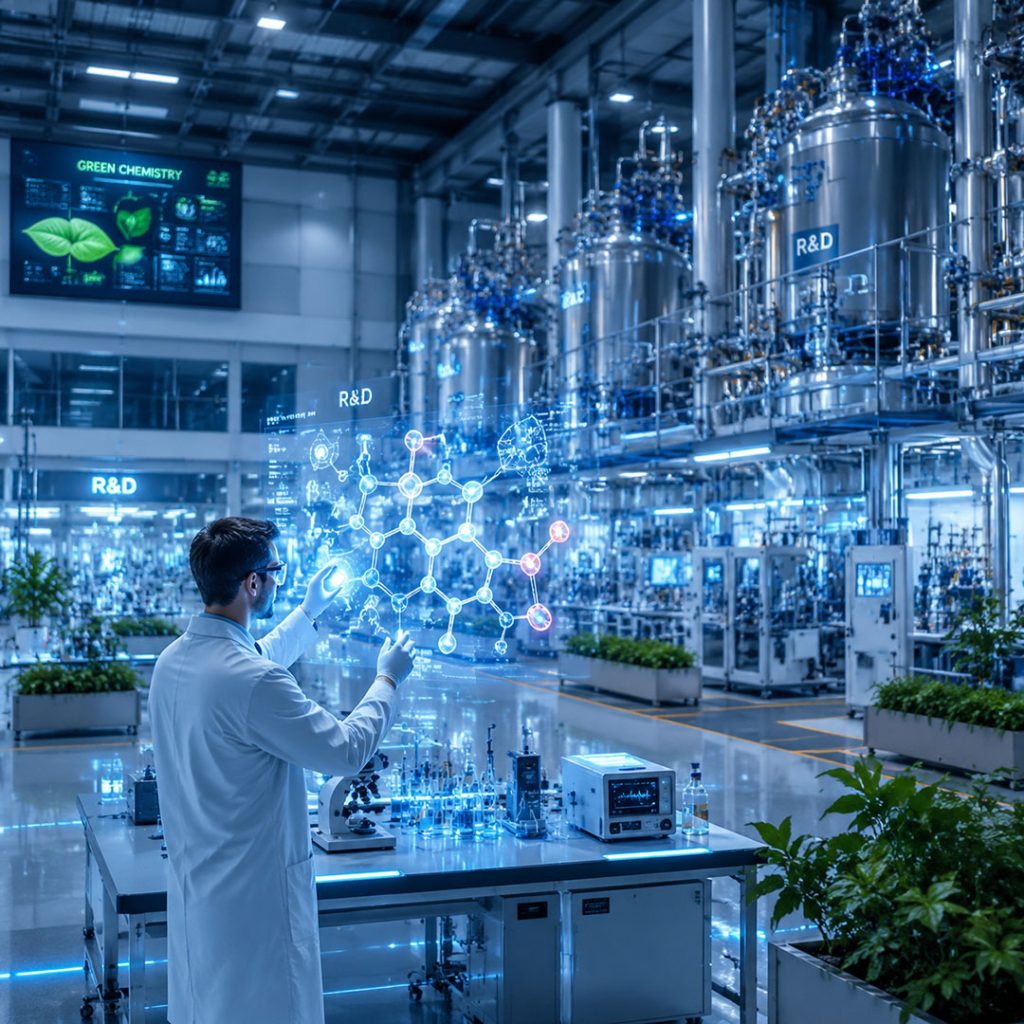
Research & Development (R&D) in the API Industry: Driving Innovation and Sustainable Growth
In today’s pharmaceutical landscape, manufacturing excellence alone is no longer enough to remain competitive. Long-term growth increasingly depends on scientific capability, process innovation, and continuous improvement.
This is where Research and Development (R&D) becomes a critical driver of success.
Within the Active Pharmaceutical Ingredient (API) industry, R&D enables manufacturers to improve production efficiency, optimize synthesis routes, enhance product quality, and strengthen long-term competitiveness.
Companies that continuously invest in pharmaceutical R&D are better positioned to adapt to changing market needs and create sustainable industrial growth.
What Is Research & Development (R&D) in the Pharmaceutical Industry?
Research and Development refers to structured scientific and technical activities focused on improving existing processes and creating new industrial capabilities.
In API manufacturing, R&D activities often include:
- Development of synthetic pathways
- Process optimization
- Purity improvement
- Cost reduction initiatives
- Technology development
- Manufacturing scalability
The objective is not only innovation—but also achieving reliable and efficient production.
Why Is R&D Critical in API Manufacturing?
API manufacturing requires a combination of chemistry, engineering, quality systems, and industrial expertise.
A strong R&D strategy supports:
Knowledge Development
Internal scientific capability strengthens long-term competitiveness and reduces dependence on external technologies.
Production Efficiency
Optimized manufacturing processes help:
- Improve reaction yields
- Reduce production costs
- Increase operational performance
Product Quality Improvement
Research teams continuously work to:
- Minimize impurities
- Improve consistency
- Increase process reliability
Faster Market Adaptation
The pharmaceutical market evolves rapidly.
R&D enables manufacturers to respond faster to changing regulatory, technological, and commercial demands.
Core R&D Activities in Active Pharmaceutical Ingredient Development
1. Synthetic Route Design
Selecting an efficient synthesis pathway directly impacts:
- Manufacturing feasibility
- Cost structure
- Production scalability
Effective route design creates long-term operational advantages.
2. Process Development
After route selection, processes must be optimized for industrial manufacturing.
This includes:
- Reaction optimization
- Equipment evaluation
- Process stability assessment
- Efficiency improvement
3. Scale-Up and Industrial Transition
A successful laboratory process must remain stable at commercial production scale.
Scale-up activities focus on:
- Maintaining product quality
- Controlling impurities
- Ensuring reproducibility
4. Adoption of Emerging Technologies
Modern pharmaceutical R&D increasingly integrates:
- Green chemistry
- Process digitalization
- Data analytics
- Intelligent manufacturing systems
These technologies support long-term operational sustainability.
The Relationship Between R&D and Quality Systems
Research and quality functions operate together.
R&D supports:
- Stable production performance
- Reduced process deviations
- Higher purity levels
Quality teams ensure those improvements remain measurable and compliant.
This integration is essential for successful API manufacturing.
How R&D Supports International Growth and Market Expansion
Global pharmaceutical markets demand more than manufacturing capacity.
Strong R&D capability enables companies to:
- Improve competitiveness
- Develop efficient production models
- Adapt to evolving regulatory requirements
- Support long-term business growth
Organizations investing in R&D create stronger foundations for international expansion.
Imagen’s Innovation-Oriented Approach to Pharmaceutical Development
Sustainable growth in pharmaceutical manufacturing depends on continuous advancement of scientific and industrial capabilities.
At Imagen Pharma, development-oriented thinking supports long-term progress in API manufacturing.
This approach emphasizes:
- Continuous improvement
- Scientific development
- Process optimization
- Quality-focused manufacturing
- Investment in innovation capabilities
By strengthening technical expertise and operational excellence, companies create greater long-term value across the pharmaceutical supply chain.
Future Trends in Pharmaceutical R&D
The future of API development is expected to be shaped by:
- Advanced process development
- Green manufacturing practices
- Artificial Intelligence applications
- Smart production systems
- Sustainable industrial design
Organizations embracing innovation today will be better positioned for future growth.
Conclusion
Research and Development (R&D) has become one of the most important growth drivers in the pharmaceutical and API industries.
Through scientific advancement, process optimization, and innovation, R&D enables manufacturers to improve quality, strengthen competitiveness, and create sustainable industrial value.
As the pharmaceutical industry evolves, investment in R&D is increasingly becoming a strategic necessity rather than an optional initiative.